In the Fall Semester of 2000 I took an industrial engineering course at Auburn University. The course was Industrial Systems 6700 and was taught by Professor and Chair Alice E. Smith. The course was entitled “Search Methods for Optimization”. The first two papers that Professor Smith handed out dealt with physical and computerized simulating annealing and were: “Equation of State Calculations by Fast Computing Machines” by Nicholas Metropolis, Arianna W. Rosenbluth, Marshall N. Rosenbluth, and Augusta H. Teller Los Alamos Scientific Laboratory, Los Alamos, New Mexico Edward Teller Notice that the inventor of the hydrogen bomb Edward Teller was involved with the paper and Optimization by Simulated Annealing | Science. The first paper dates from the year I was born namely 1953 and the second paper 1983, the latter year was the year that I flunked out of the Georgia Institute of Technology.
Our first assignment dealt with optimization via computerized simulating annealing (SA) and Professor Smith gave the class her implementation of the algorithm. By the way, over the last 22 years I have reused Smith’s algorithm in many of my own computer applications (C, C++, and C# computer languages).
SA gained the favor of Federal Express in 1983 and the Science paper mentioned above details the delivery service corporations use of the algorithm. The state of the art in solving the traveling salesperson problem (TSP) is the Concorde program written by scholars at the University of Waterloo in Canada: The traveling salesman problem | Mathematics | University of Waterloo (uwaterloo.ca). I believe Concorde uses linear programming.
With my software I am only able to solve small in size instances of the TSP. My implementations in a single computer application to solve toy random instances of the TSP for 3 to 25 number of locations are: brute force (3 to 9 cities), steepest descent local search (SDLS) from http://www.cs.bham.ac.uk/~wbl/biblio/gecco2007/docs/p1226.pdf, tabu search, evolutionary hill climber (EHC), genetic algorithm (GA), simulated annealing, some hybrid methods, minimum spanning tree, etc.
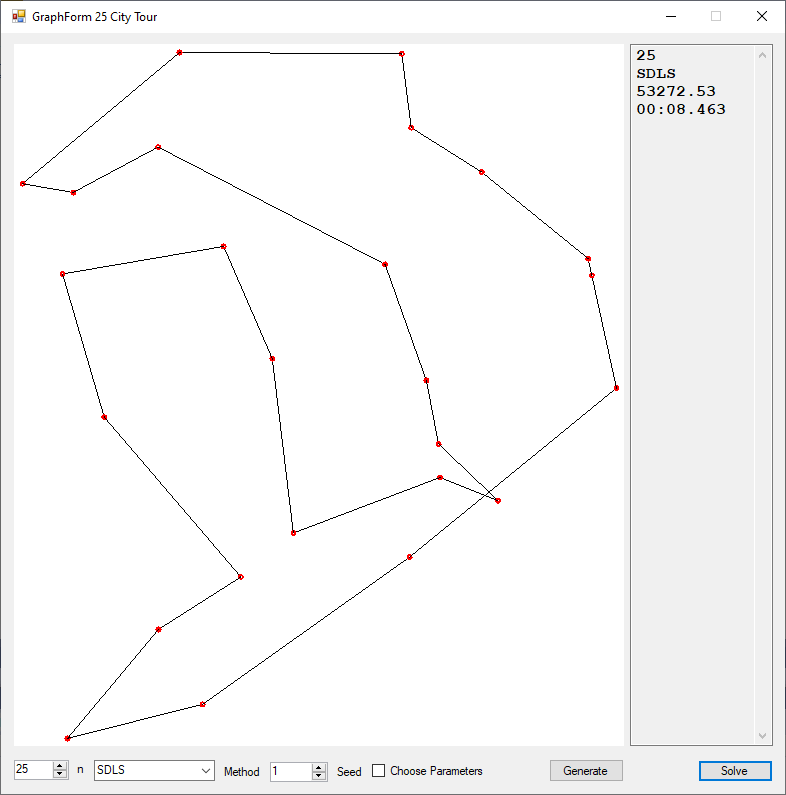
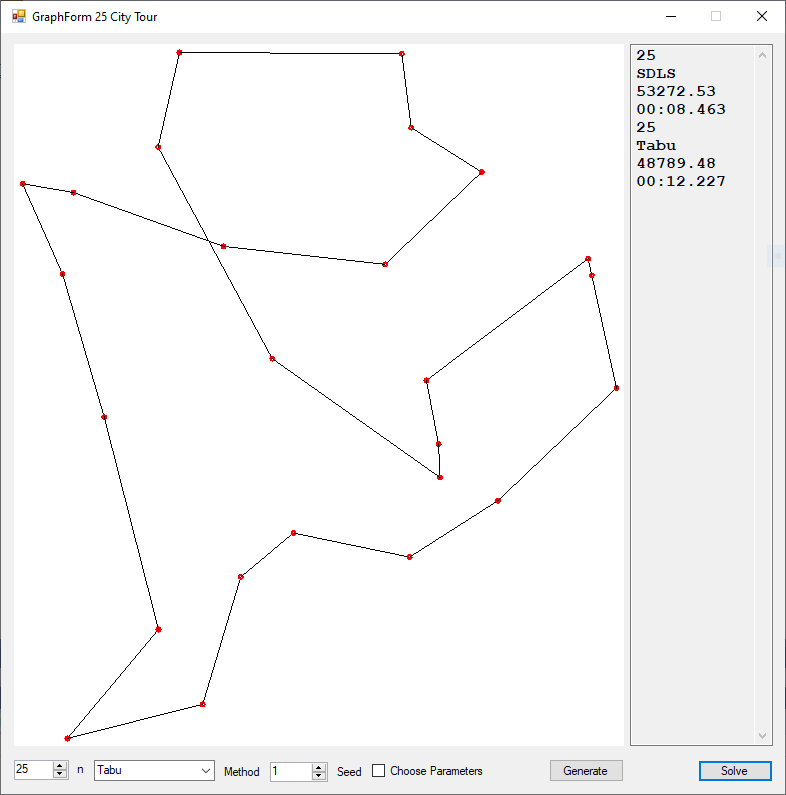
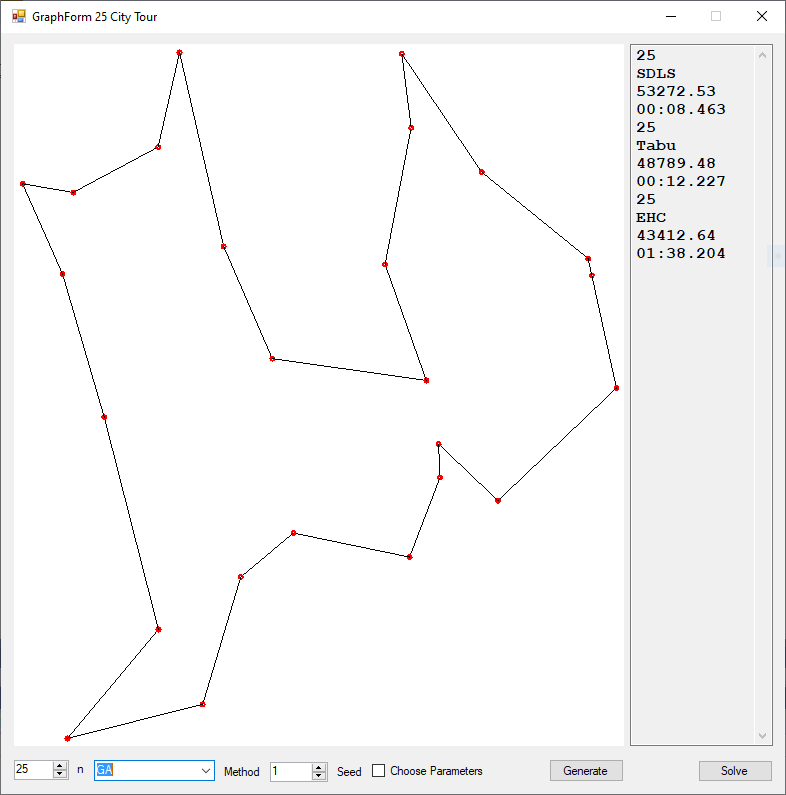

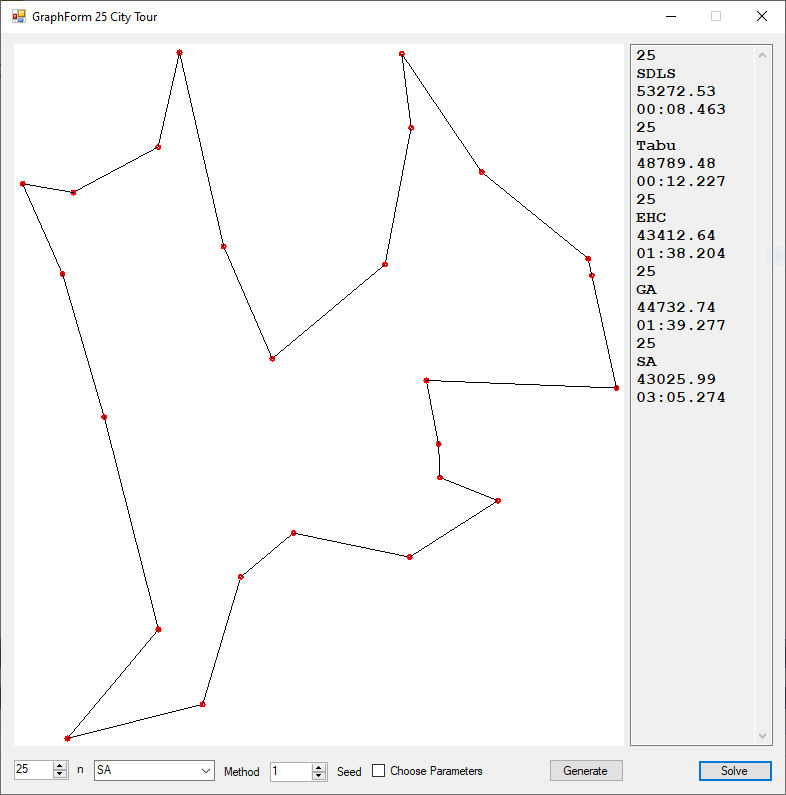

 Numerical Explorations