

There are analytic equations that are applicable to the trajectory of a batted or thrown baseball:
Click to access 04-LAJPE-782_Chudinov.pdf
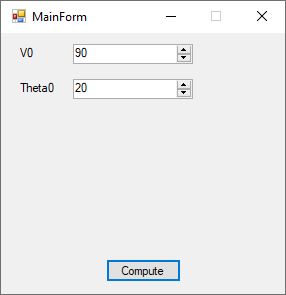
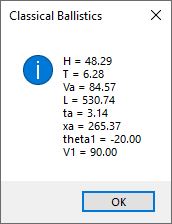
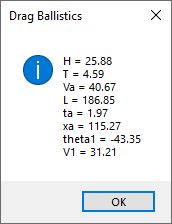
I created a C# application to test the preceding equations against numerical methods of calculating the trajectory of a baseball. The baseball has an initial velocity of 90 miles per hour and an angle of inclination of 20 degrees. The classical model certainly overestimates the trajectory.





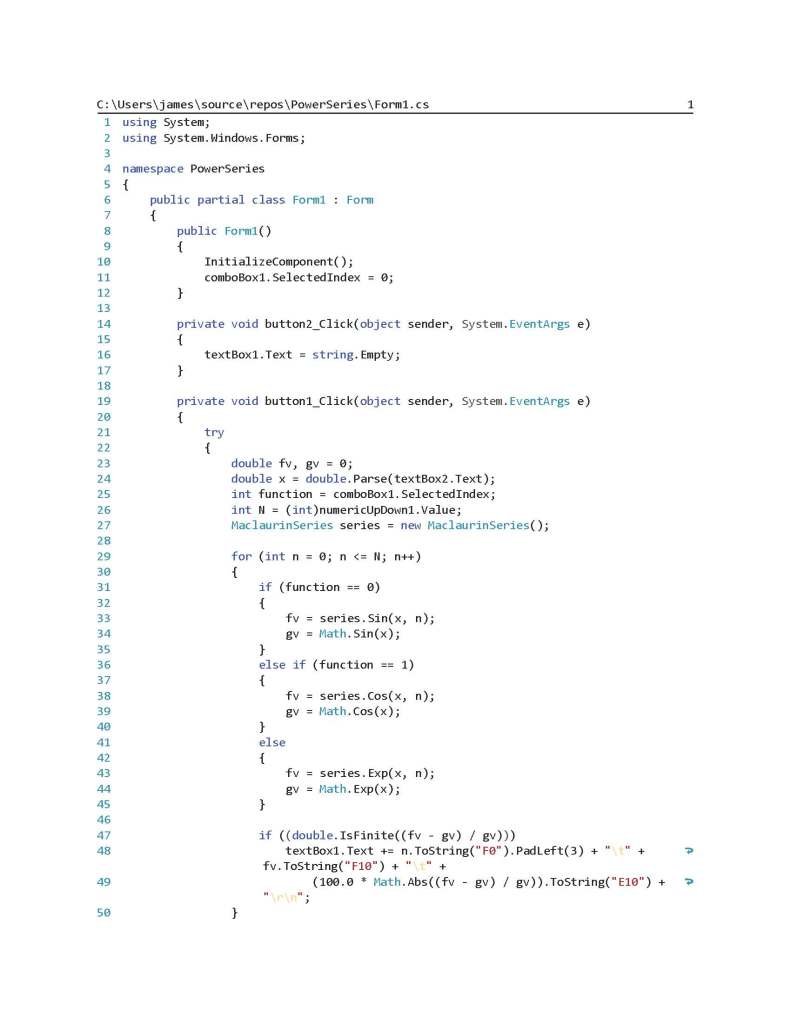
Siacci’s Method Chapter 5 and Appendix A of “Exterior Ballistics, 1935” by Lieutenant Commander Ernest Edward Herrmann of the United States Naval Academy. This is an approximate technique for solving exterior ballistics trajectories with between 12 to 15 degrees of elevation. The artillery is the 16 inch / 50 caliber rifled guns of the Iowa class of fast battleships (BB-61 USS Iowa, BB-62 USS New Jersey, BB-63 USS Missouri, and BB-64 USS Wisconsin).


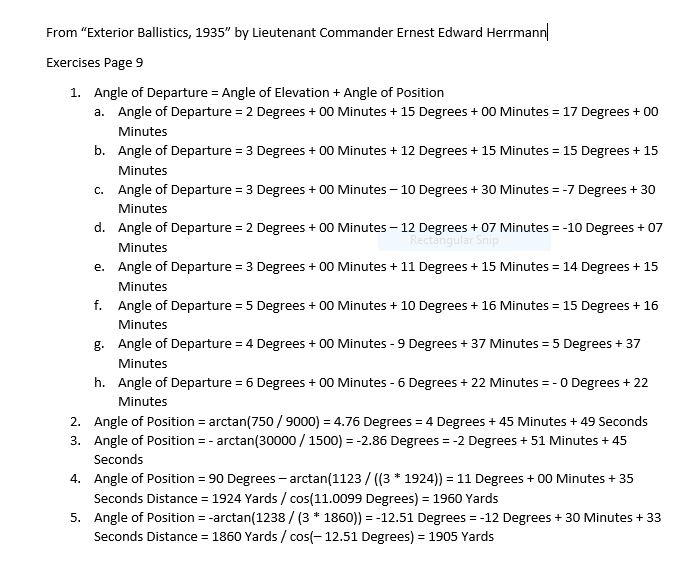
Merry Christmas to all you devout Christians. I am not one of you. I am about to embark on a mission to carefully annotate with open source C# computer code my copy of “Exterior Ballistics, 1935” by Professor Ernest Edward Herrmann of then the United States Naval Academy at Annapolis, Maryland. This book set the standard for naval gunnery in World War II. Of course, our navy and especially our battle-wagons had the largest rifled artillery of any United States service. The 105 mm = 105 mm / 25.4 mm / inch = 4.13 inches, 120 mm / 25.4 mm / inch = 4.72 inches, and 155 mm / 25.4 mm / inch = 6.10 inch of our excellent United States Army and United States Marine Corps (semper fidelis) are puny in comparison to the mighty 8, 10, 12, 14, and finally 16 inch mostly rifled artillery of our incredible navy’s cruisers, dreadnoughts, and battleships of the World War I and World War II era ships. Even a destroyer of the USN Fletcher class had 5-inch (127 mm) / 38 caliber rifled artillery which had a 5 inch * 38 = 190-inch barrel length. Our mightiest naval artillery was, of course, my favorite the mighty 16 inch (406.4 mm) / 50 caliber rifles that had a barrel length of 16 * 50 inches = 800 inches = 66.6 feet!
Thanks,
James Pate Williams, Jr.
Bachelor of Arts Chemistry LaGrange College 1979
Bachelor of Science Computer Science LaGrange College 1994
Master of Software Engineering Auburn University 2000
Doctor of Philosophy Computer Science Auburn University 2005
Gratis Open Source Computer Software Developer Since Summer 1978
1980 – 1983 Graduate Work in Chemistry and Mathematics at Georgia Tech
A Current Website I developed for my friends Wesley “Wes” and Missy Cochran:
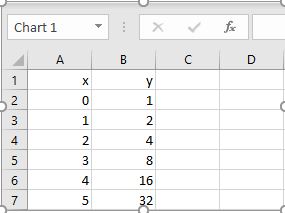
First Function in Excel (Assumes that You Have Access to an Office 365 Subscription)
Please attempt the following procedure:
Note that x is in the finite set { 0, 1, 2, 3, 4, 5 }
Note that y is the function y = 2 ^ x where ^ is the exponentiation operator

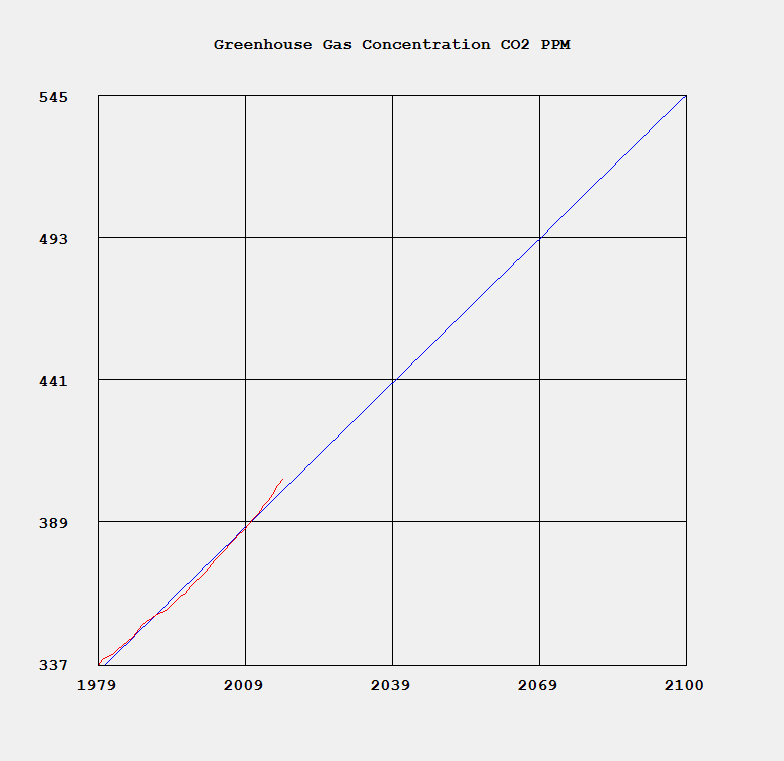
I designed and implemented a C# computer language application to model the global greenhouse gas concentrations data found on the NOAA website:
https://www.esrl.noaa.gov/gmd/aggi/aggi.html
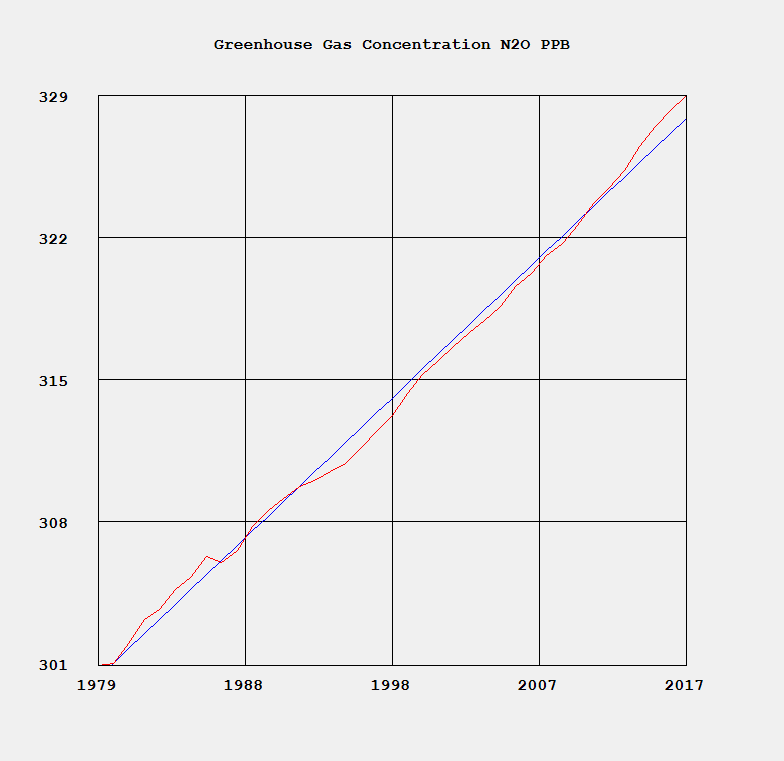
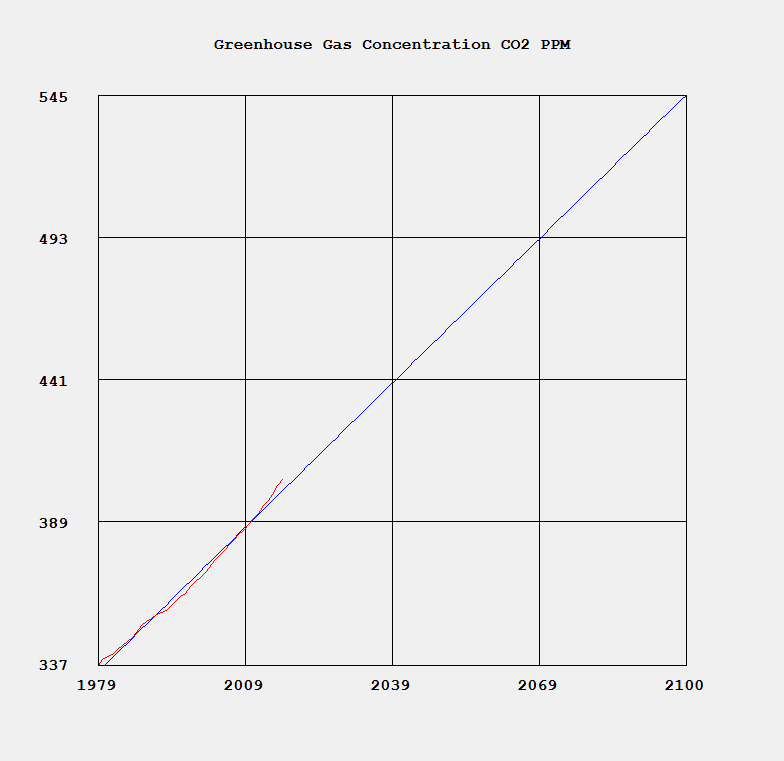
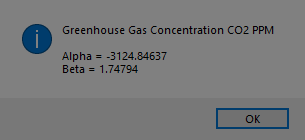
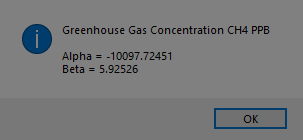
I used the latest recommended data for time period 1979 to 2017. The concentrations of three greenhouse gases were modeled: carbon dioxide (CO2), methane (CH4), and nitrous oxide (N2O).
The empirical modeling paradigm I used was simple linear regression. My model goes out to the year 2300. The key formulas used by the model are:

See the website:
https://en.wikipedia.org/wiki/Simple_linear_regression
Some plots of the concentrations in parts per million (PPM) and parts per billion (PPB) are given below.






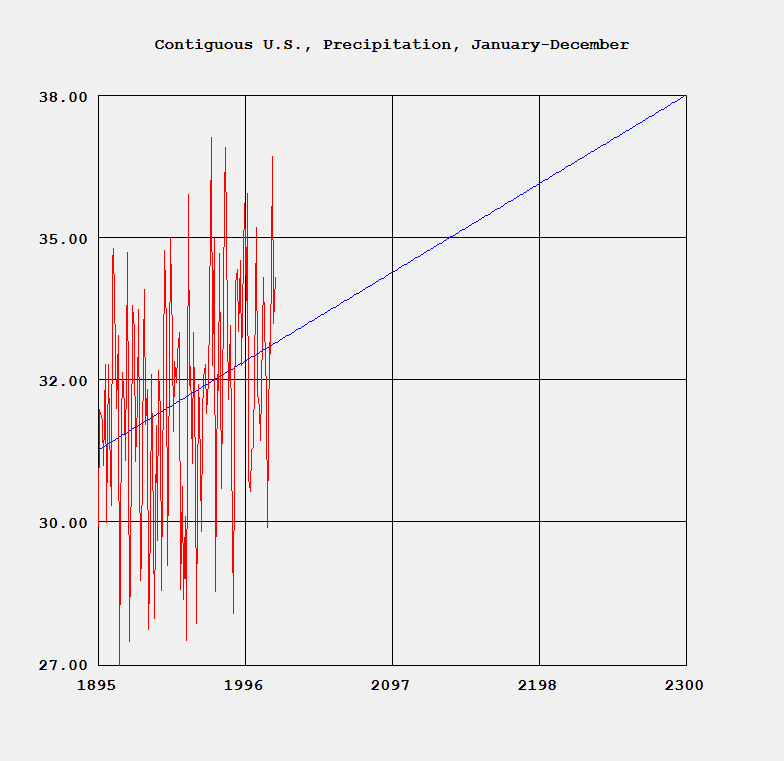
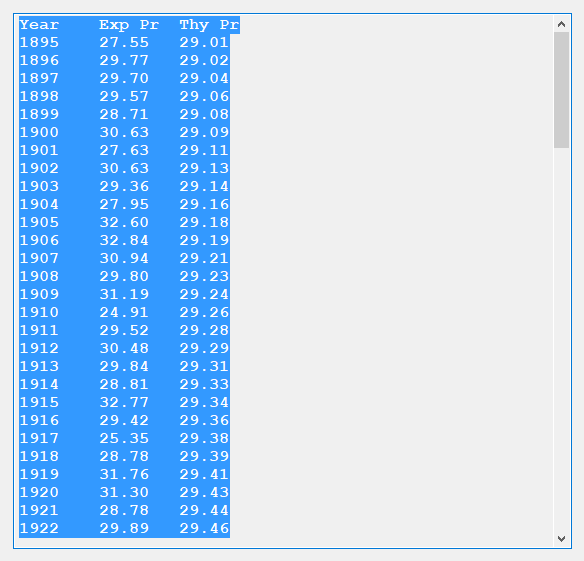
I designed and implemented a C# computer language application to model the precipitation data found on the NOAA website:
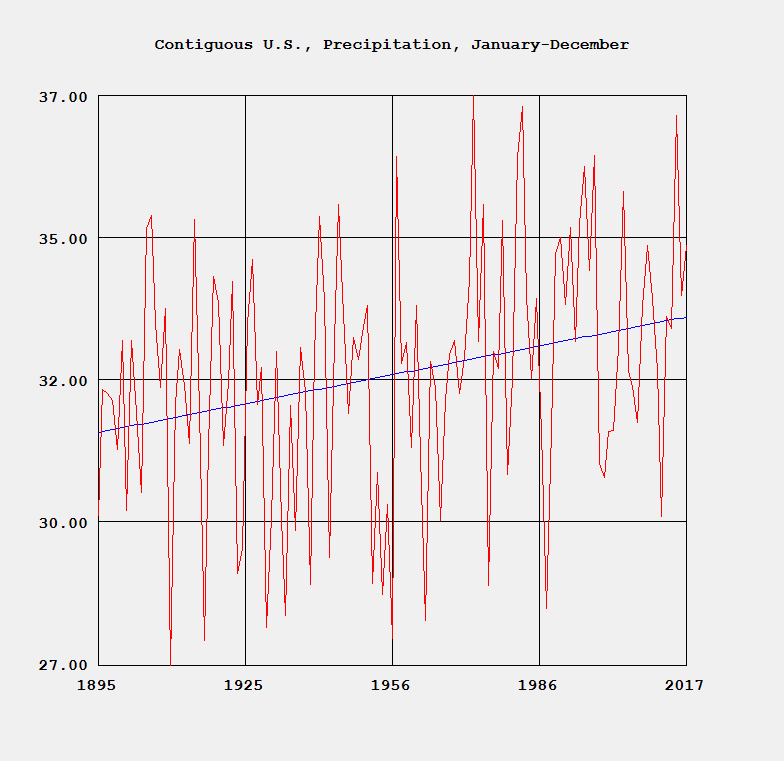
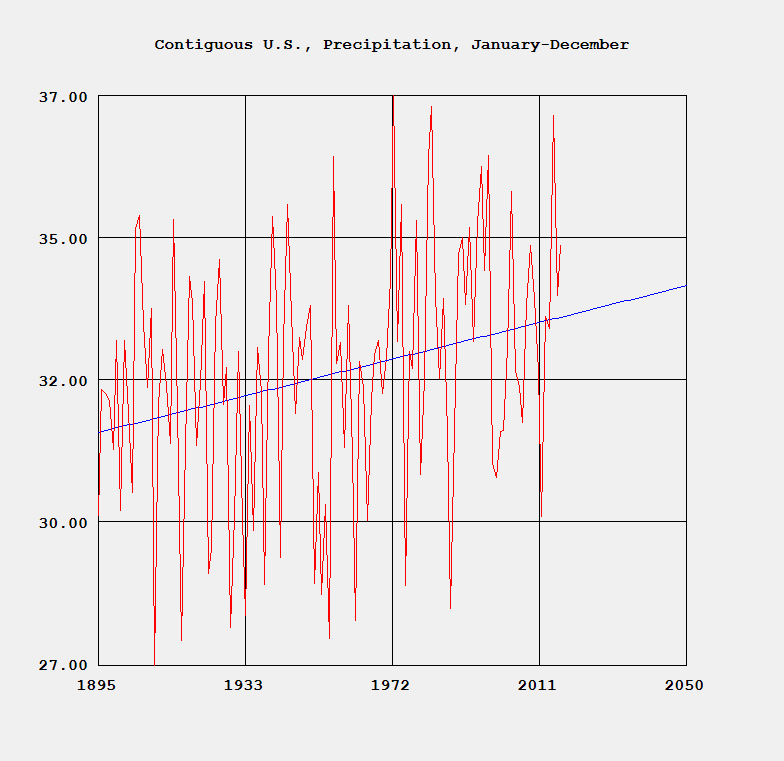
I used the latest recommended data for time period 1895 to 2017. The empirical modeling paradigm I used was simple linear regression. My model goes out to the year 2300. The key formulas used by the model are:
See the website:
https://en.wikipedia.org/wiki/Simple_linear_regression
Some plots of the contiguous U.S. precipitation are shown below. The climate is getting wetter thus some parts of the U.S.maybe more prone to floods.



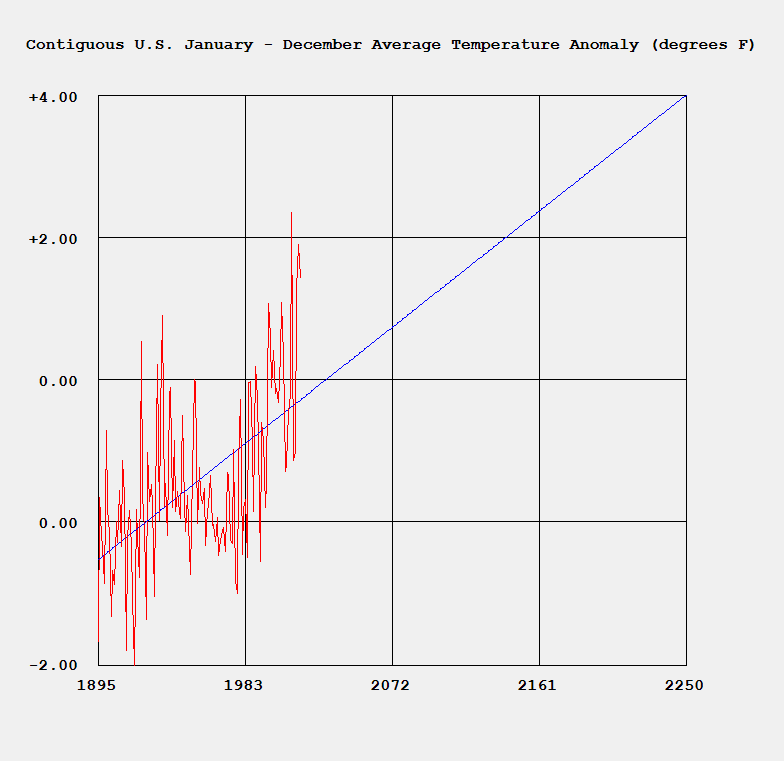
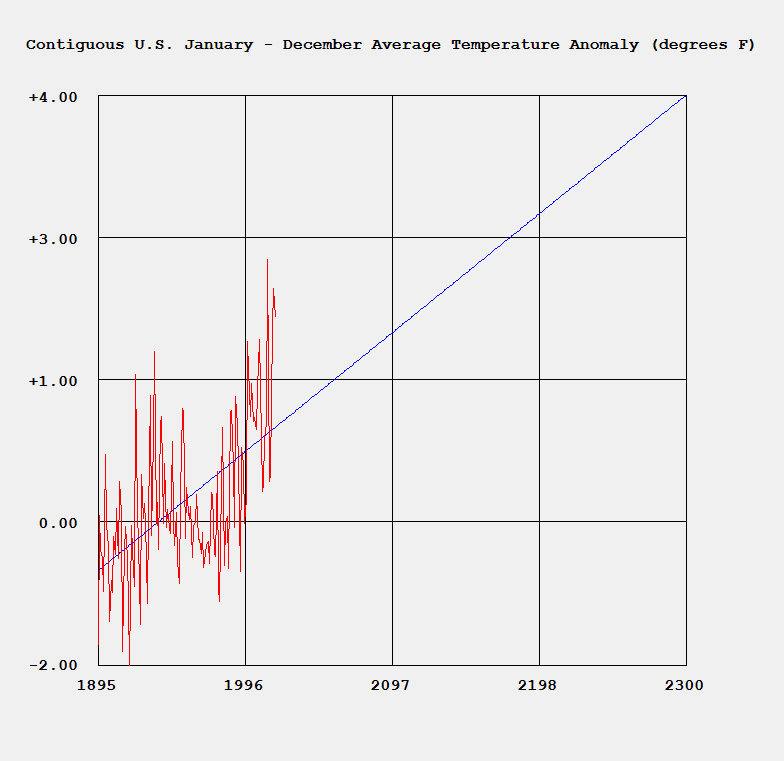
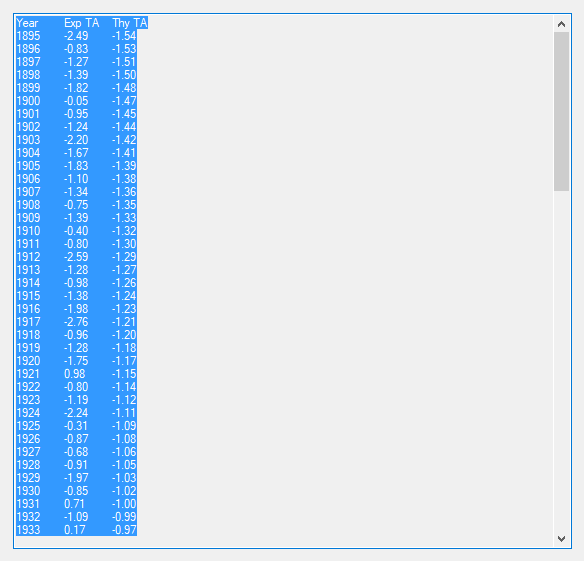
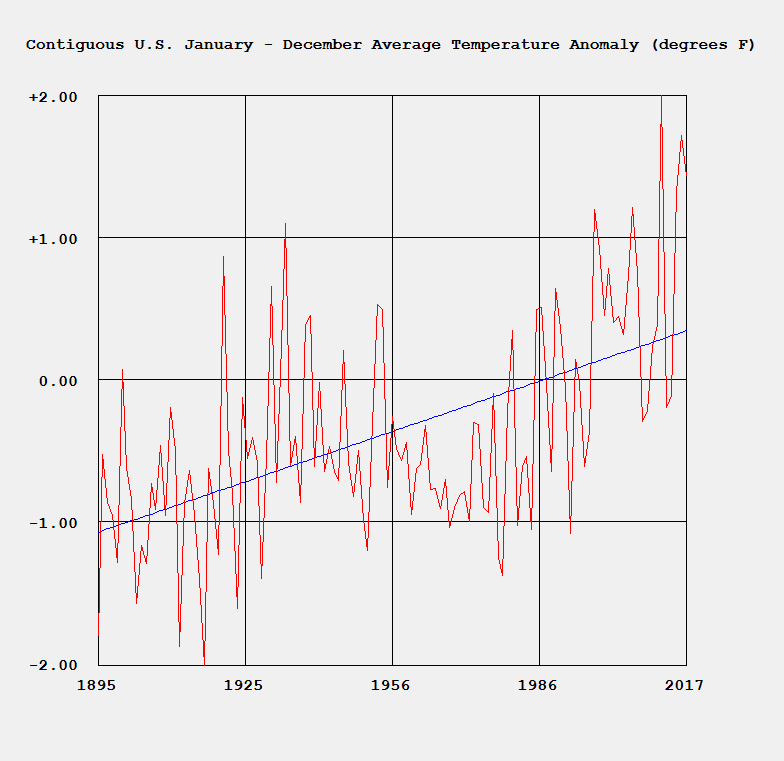
I designed and implemented a C# computer language application to model the temperature anomaly data found on the NOAA website:
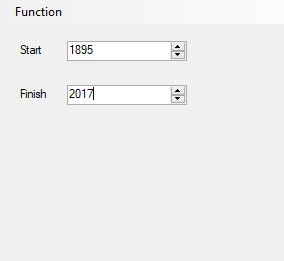
I used the latest recommended data for time period 1895 to 2017. The empirical modeling paradigm I used was simple linear regression. My model goes out to the year 2300. The key formulas used by the model are:

See the website:
https://en.wikipedia.org/wiki/Simple_linear_regression
Below are some plots of the temperature anomaly.