Video Blog Entries of Wednesday, March 16, 2021

Gibson EDS-1275 Double Neck Twelve String Over Six String Guitar May 2009 Post Production March 2022
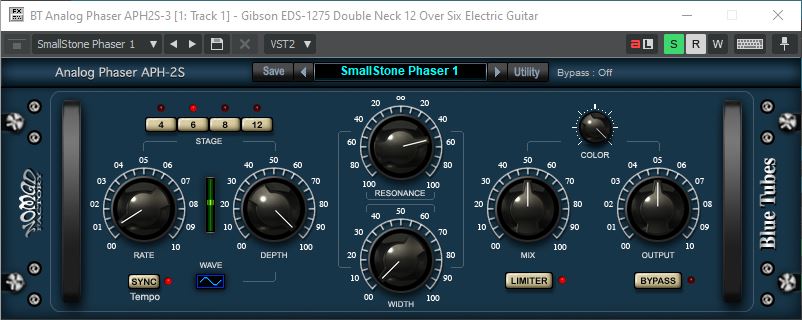
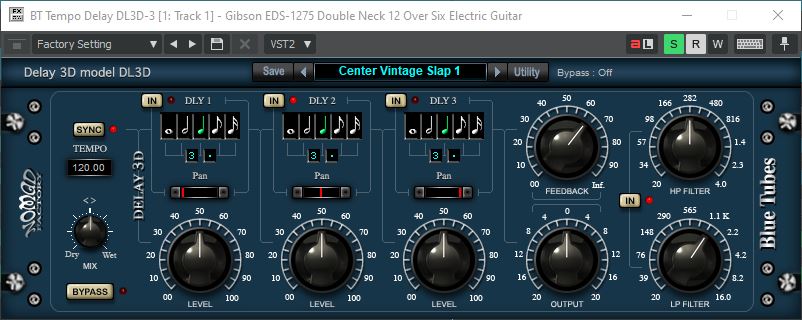
First Effect for First Video of this Blog Entry
Second Effect for First Video of this Blog Entry
Third Effect for First Video of this Blog Entry
Fourth Effect for First Video of this Blog Entry
Fifth Effect for First Video of this Blog Entry
Effects Used in the Second Video
Windows ’95 MIDI Sequencer Translated from Java in About 2005
An Early Attempt at Creating Computer Generated Music in May 1988 Using My Brand New Commodore Amiga 2000 and Microsoft’s Amiga Basic The Amiga’s Display Uses Colors but my 2015 Recreation Is in Black and White (Monochrome)

Large Integer Packages by James Pate Williams Jr

Back in the late 1990s I trained myself in number theory and cryptography using the “Handbook of Applied Cryptography” by Alfred J. Menezes and his coeditors and the FreeLIP (Free Large Integer Package) package by Arjen K. Lenstra. FreeLIP is quite an elegant C library, but it is now considered obsolete. I know of MIRACL that was Henri Cohen’s favorite large integer library. I have four books in my personal library that have unsigned or signed multiple precision integer arithmetic code and/or algorithms: “A Numerical Library in C for Scientists and Engineers” by H .T. Lau, “Handbook of Applied Cryptography”, “Prime Numbers and Computer Methods of Factorization Second Edition” by Hans Riesel, and “Semi-numerical Algorithms Second Edition” by Donald Knuth. I also have several number theory and cryptography textbooks.

As an exercise in Python console programming, I translated my C# Visual Studio 2008 large integer code to Python. Back in 2008 Visual Studio C# did not support large integers. I used Riesel’s input and output code which was translated from Pascal code. I also utilized algorithms from the “Handbook of Applied Cryptography”. I included Sieve of Eratosthenes for primes <= 100,000, a trial division factoring algorithm, and programmed the Pollard rho factoring algorithm found in the handbook.

My Deepening Understanding of Numerical Analysis and Computer Programming by James Pate Williams Jr Blog Entry 01 11 2022

I have had three formal courses in elementary numerical analysis: one at Georgia Tech and two at LaGrange College. All three of these courses were targeting the undergraduate/graduate students at the institutions. The course at Georgia Tech was Scientific Computing I and was taught by Professor Gunter Meyer in the Summer Quarter of 1982. The other two courses were taught by Professor Fay A. Riddle. One of the LC courses was in Fall Quarter 1986 and the other was taught in Fall Quarter 1991. I had a mental break from reality in 1986 and I wound up in the Bradley Center in Columbus, GA for a few months’ hospitalization. I made the grades: B, C, and A respectively. I have done a lot of numerically based computer programming primarily in the Dayton BASIC, FORTRAN IV, and DG Pascal in the era: 1978 to 1980. I entered Georgia Tech in Fall 1980, so I was just able to work on the LC Data General Eclipse minicomputer on some weekends. I was deathly afraid of the Control Data Corporations Cyber supercomputer on the campus of Georgia Tech. The chairperson of the Chemistry Department, Professor Bertrand at Georgia Tech unsuccessfully tried to convince to use the Data General Eclipse minicomputer in the x-ray crystallography lab in the Boggs Chemistry Department building.

In the late 1980s I advanced to doing numerical computing on my first microcomputer, a Commodore Amiga 2000, which came into my life on Saturday, April 30, 1988. I used this machine until late 1994 when I acquired a mom-and-pop store Microsoft Intel personal computer. The Commodore Amiga languages I used were Microsoft Amiga BASIC, Modula-2, and Pecan Pascal. The languages on my first PC were Borland C++ and Borland Turbo Pascal.

I seem to recall that I transitioned to a Dell personal computer in 1998 and was using Visual Studio 6 in the C++ language. I used this computer along with another Dell personal computer which was purchased in 2002. I started programming in Java in the summer of 1999 when I took a course in object-oriented computer languages featuring the Sun Microcomputers version of Java. The Java course was taught by Professor Homer Carlisle who later became a doctoral faculty advisor of mine.

There was a lull in my numerical analytic software development during the late 1990s until the mid- 2000s. That period was the time required for me to earn a Master of Software Engineering and Doctor of Philosophy in Computer Science in Summer 2000 (August) and Fall 2005 (December) at Auburn University, respectively. I bought an Apple Power Mac with dual G5 IBM 64-bit microprocessors in December 2004. Unfortunately, it did not survive until about 2008 to 2009. In 2009, I bought a Dell computer running a CoreI7 processor and Vista Ultimate operating system along the software: Microsoft Visual Studio 2008 Professional and Cakewalk SONAR 8 Producer Edition.

I started doing a lot of software development covering a wide range of the spectra of computer algorithms in February 2015. These projects in Visual Studio 2008 and later Visual Studio 2015 were uploaded to the defunct Microsoft TechNet Forum and Gallery. I think I had around 250 projects in Vanilla C, Win32 C, Win32 C++, and C#. I bought my last Dell personal computer in December 2015. I do have a fair recently purchased Dell notebook computer.

Currently, I am teaching myself Python and I hope later to expand my knowledge of JavaScript.

Python Code to Implement the Linear Algebraic Rule by Cramer for a 3 by 3 Set of Linear Equations by James Pate Williams Jr

The algebraic example comes from the website:

Cramers Rule Calculator (ncalculators.com)

Quadratic, Cubic, and Quartic Python Equation Solver by James Pate Williams Jr

Back in 2015 I created a C# application to solve quadratic, cubic, and quartic equations which are of degrees 2, 3, and 4, respectively. Yesterday I successfully translated the C# to the Python console. I bench-marked my computer programs against the online calculators on the following website:

Cubic equation Calculator – High accuracy calculation (casio.com)

Quartic equation Calculator – High accuracy calculation (casio.com)

Here are my resulting Python outputs: