Author: jamespatewilliamsjr
My whole legal name is James Pate Williams, Jr. I was born in LaGrange, Georgia approximately 70 years ago. I barely graduated from LaGrange High School with low marks in June 1971. Later in June 1979, I graduated from LaGrange College with a Bachelor of Arts in Chemistry with a little over a 3 out 4 Grade Point Average (GPA). In the Spring Quarter of 1978, I taught myself how to program a Texas Instruments desktop programmable calculator and in the Summer Quarter of 1978 I taught myself Dayton BASIC (Beginner's All-purpose Symbolic Instruction Code) on LaGrange College's Data General Eclipse minicomputer. I took courses in BASIC in the Fall Quarter of 1978 and FORTRAN IV (Formula Translator IV) in the Winter Quarter of 1979. Professor Kenneth Cooper, a genius poly-scientist taught me a course in the Intel 8085 microprocessor architecture and assembly and machine language. We would hand assemble our programs and insert the resulting machine code into our crude wooden box computer which was designed and built by Professor Cooper. From 1990 to 1994 I earned a Bachelor of Science in Computer Science from LaGrange College. I had a 4 out of 4 GPA in the period 1990 to 1994. I took courses in C, COBOL, and Pascal during my BS work. After graduating from LaGrange College a second time in May 1994, I taught myself C++. In December 1995, I started using the Internet and taught myself client-server programming. I created a website in 1997 which had C and C# implementations of algorithms from the "Handbook of Applied Cryptography" by Alfred J. Menezes, et. al., and some other cryptography and number theory textbooks and treatises.
Blog Entry Tuesday, March 22, 2022
Blog Entry Monday, March 21, 2022
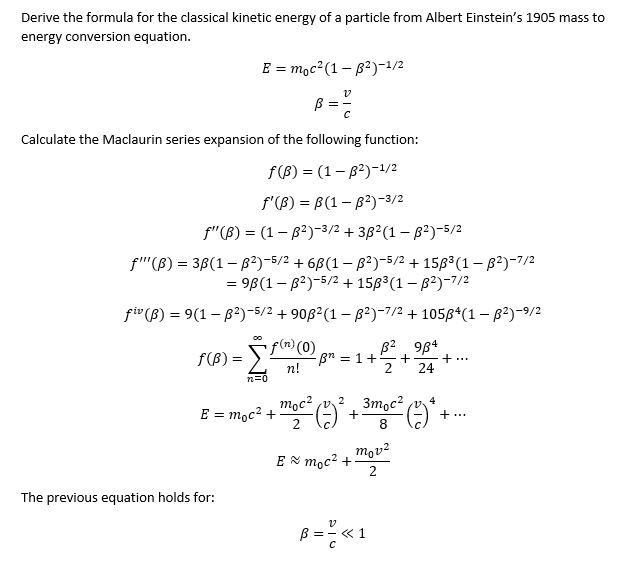
Blog Entry of Saturday, March 19, 2022 – Derivation of the Classical Kinetic Energy from Einstein’s Famous Equation
Video Blog Entries of Wednesday, March 16, 2021

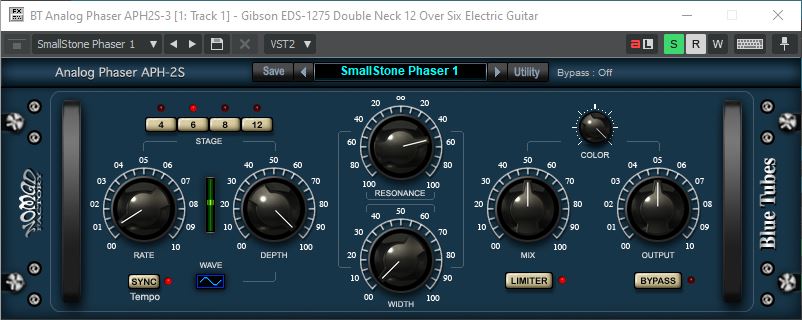
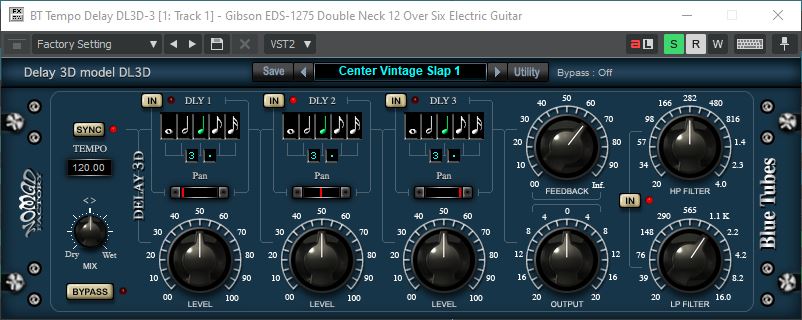


Blog Entry of Sunday February 6, 2022 by James Pate Williams, Jr.
This is a heavily edited version of an earlier blog entry of Wednesday February 2, 2022.
Blog Entry of Wednesday February 2, 2022 by James Pate Williams, Jr.
Blog Entry of January 27, 2022 by James Pate Williams, Jr
Blog Entry 01 11 2022 AES Exploration 2009 to 2018
Large Integer Packages by James Pate Williams Jr
Back in the late 1990s I trained myself in number theory and cryptography using the “Handbook of Applied Cryptography” by Alfred J. Menezes and his coeditors and the FreeLIP (Free Large Integer Package) package by Arjen K. Lenstra. FreeLIP is quite an elegant C library, but it is now considered obsolete. I know of MIRACL that was Henri Cohen’s favorite large integer library. I have four books in my personal library that have unsigned or signed multiple precision integer arithmetic code and/or algorithms: “A Numerical Library in C for Scientists and Engineers” by H .T. Lau, “Handbook of Applied Cryptography”, “Prime Numbers and Computer Methods of Factorization Second Edition” by Hans Riesel, and “Semi-numerical Algorithms Second Edition” by Donald Knuth. I also have several number theory and cryptography textbooks.
As an exercise in Python console programming, I translated my C# Visual Studio 2008 large integer code to Python. Back in 2008 Visual Studio C# did not support large integers. I used Riesel’s input and output code which was translated from Pascal code. I also utilized algorithms from the “Handbook of Applied Cryptography”. I included Sieve of Eratosthenes for primes <= 100,000, a trial division factoring algorithm, and programmed the Pollard rho factoring algorithm found in the handbook.


