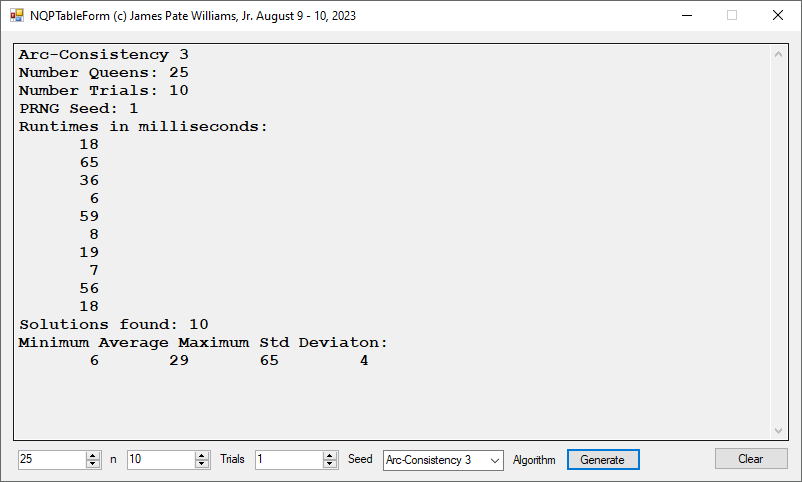
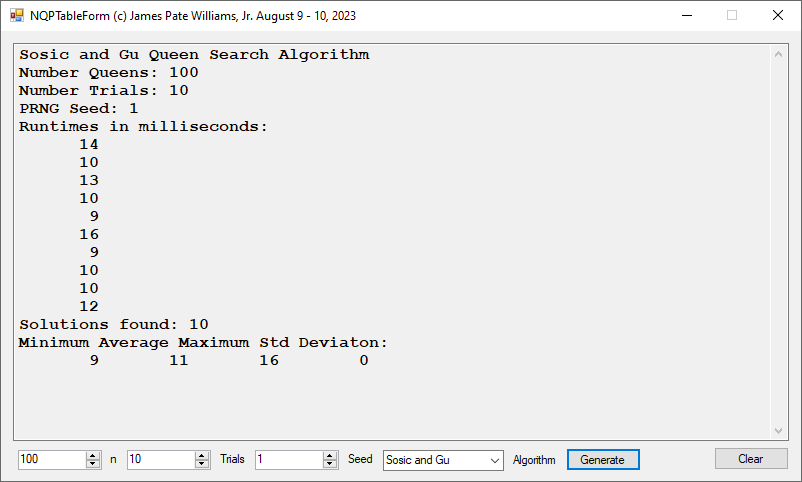
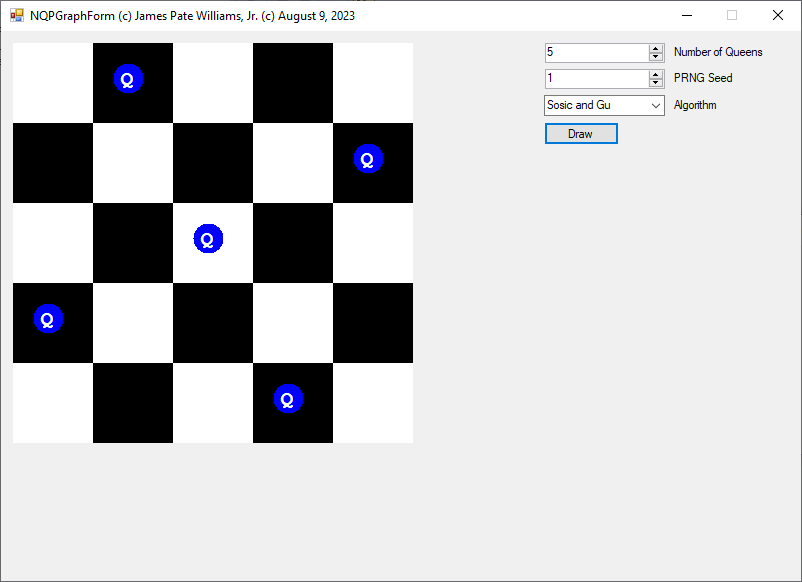
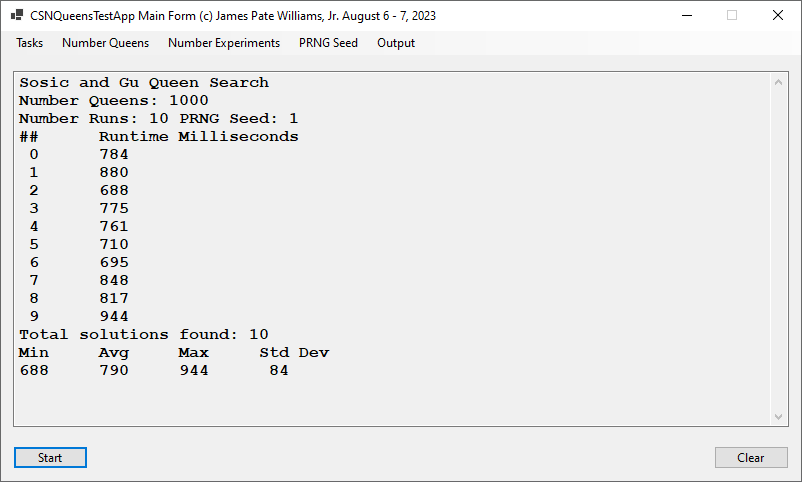
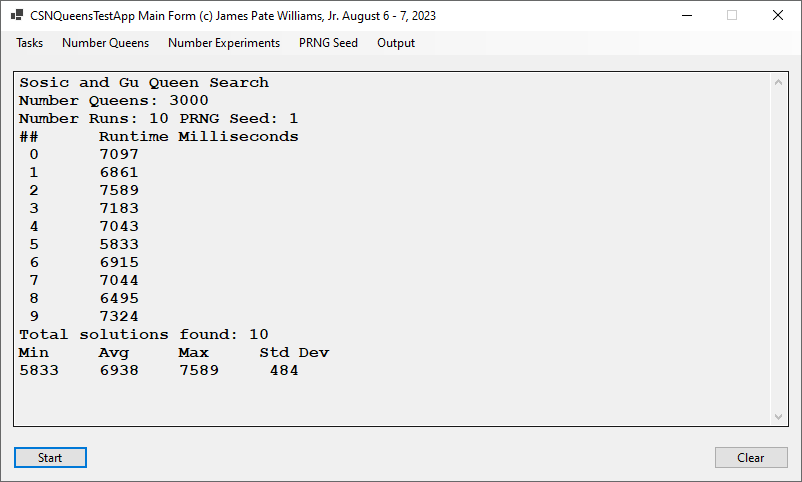
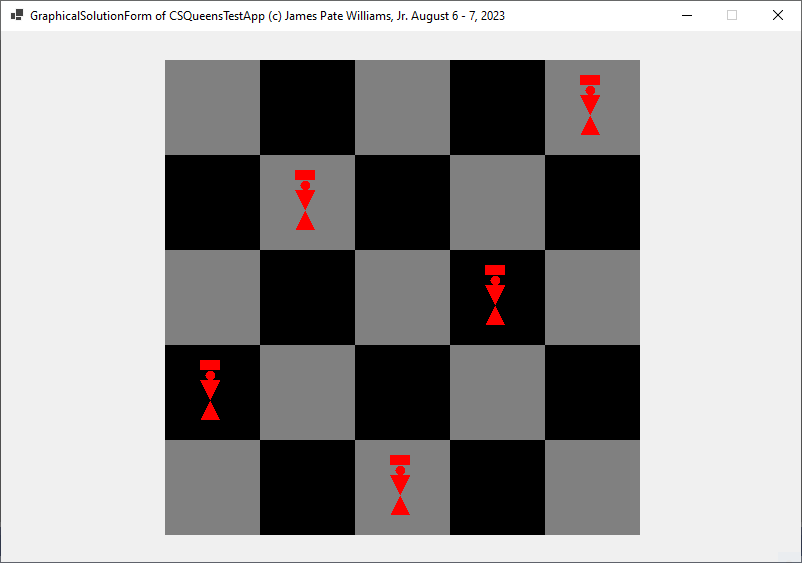
I implemented the Sosic and Gu fast N-Queens solver first in C++ and later in C#. The five screen shots below were created by latest C# application. None of my other algorithms can compete with this method.
The Graph Coloring Problem and N-Queens Puzzle are both NP-Complete constraint satisfaction problems. There does not exist polynomial time algorithms to solve large instances of either problem. The Graph Coloring Problem is given a graph of n-vertices and m-edges find the minimum number of colors such that no two connected vertices are of the same color. The N-Queens Puzzle is given a n-by-n chessboard and n-queens place the queens such that no two queens are attacking one another. A queen in chess can move any number of squares diagonally, horizontally, or vertically.
As a Master of Software Engineering graduate student in the era 1998 to 2000, I majored in the subdiscipline of artificial intelligence known as constraint satisfaction. I developed evolutionary hill-climbing algorithms to solve constraint satisfaction problems. I specifically solved instances of the Graph Coloring Problem and the N-Queens Puzzle. I compared my algorithms with other researchers’ algorithms. One of the algorithms tested was Makato Yokoo’s Weak-Commitment Search Algorithm (WCSA). Yakoo wrote a very nice book named “Distributed Constraint Satisfaction” which has excellent flow-charts of several algorithms including the Min-Conflicts Search Algorithm (MCSA) and his WCSA. I implemented both algorithms in the C++ and Java computer languages.
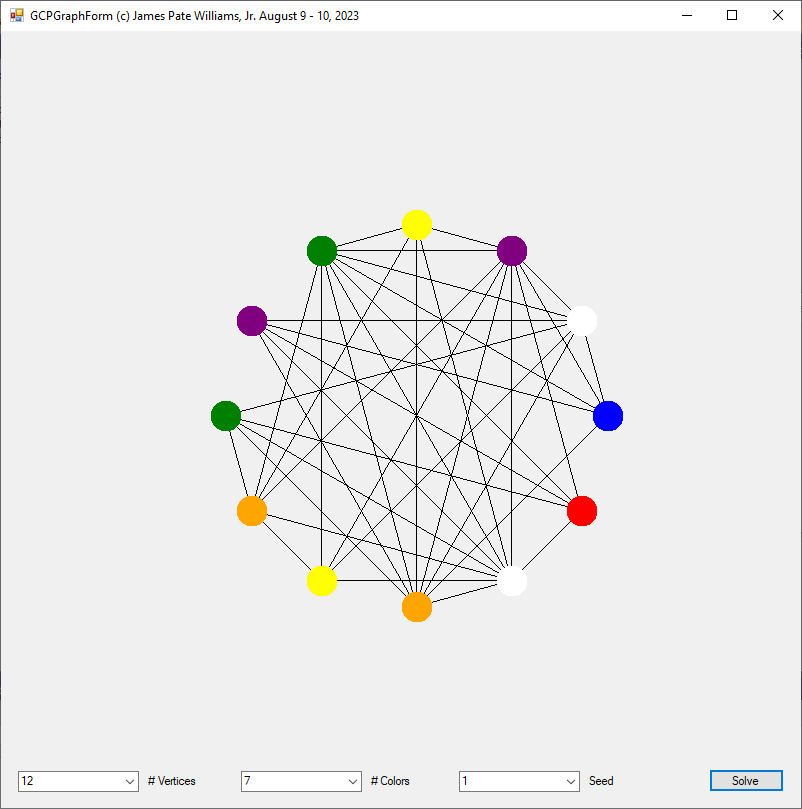
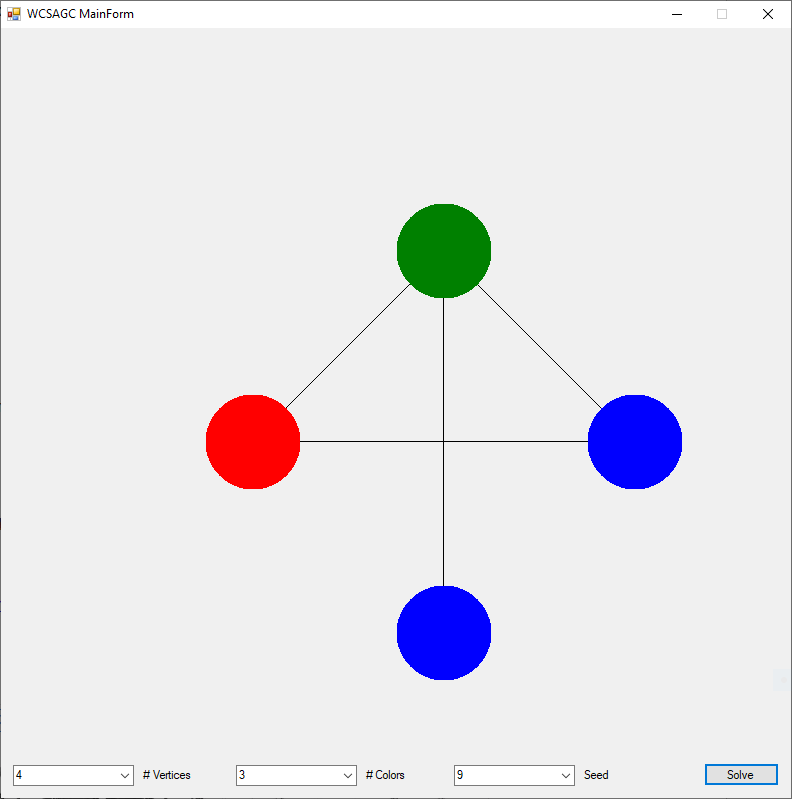
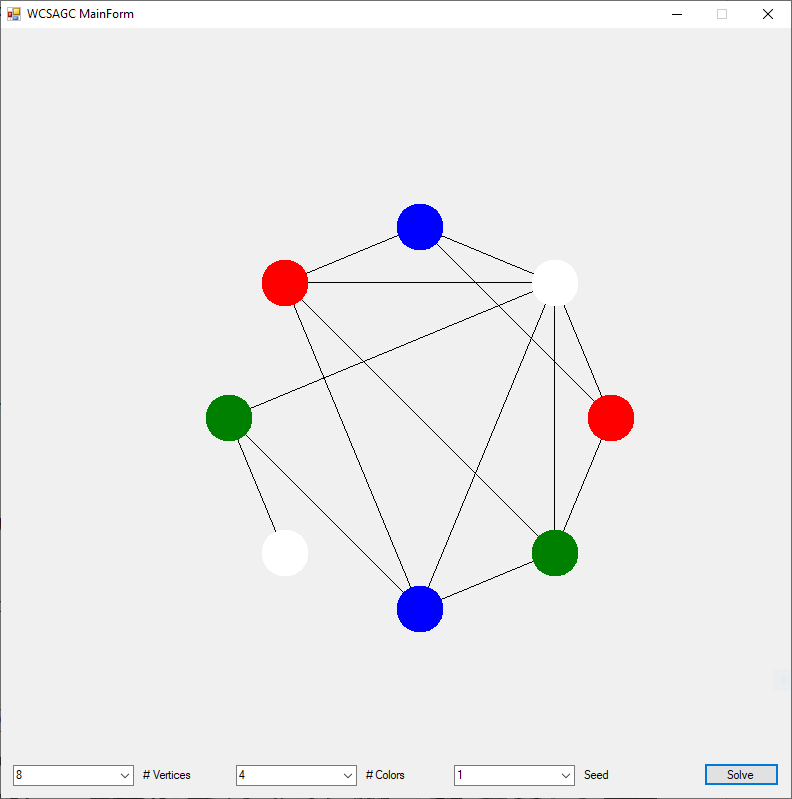
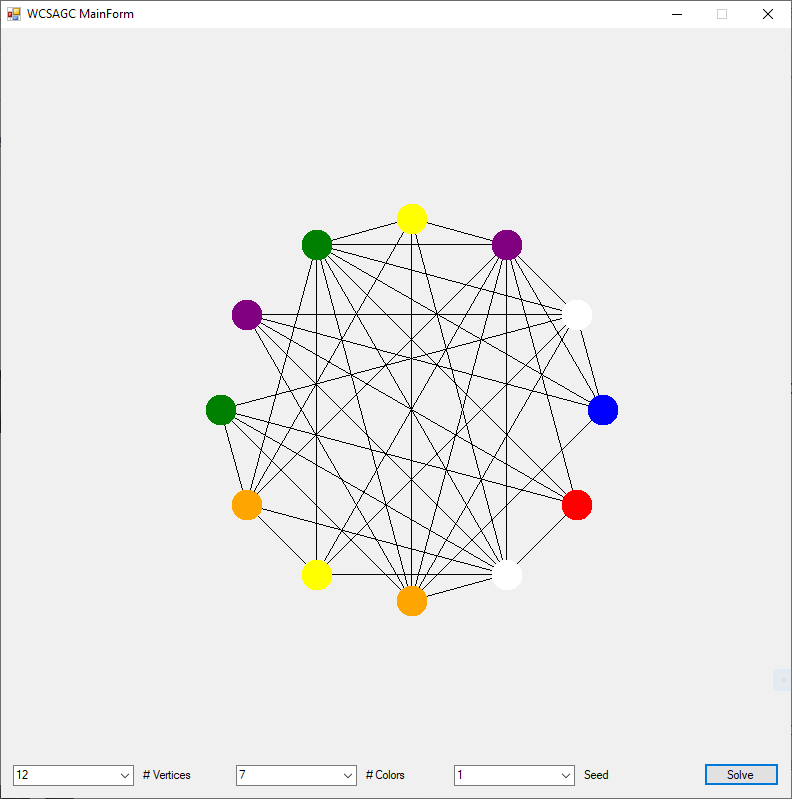
I rewrote the preceding two algorithms in the C# computer language sometime in the epoch 2008 – 2009. Below are three instances of the Graph Coloring Problem with four, eight, and twelve vertices solved by the Yakoo’s WCSA.
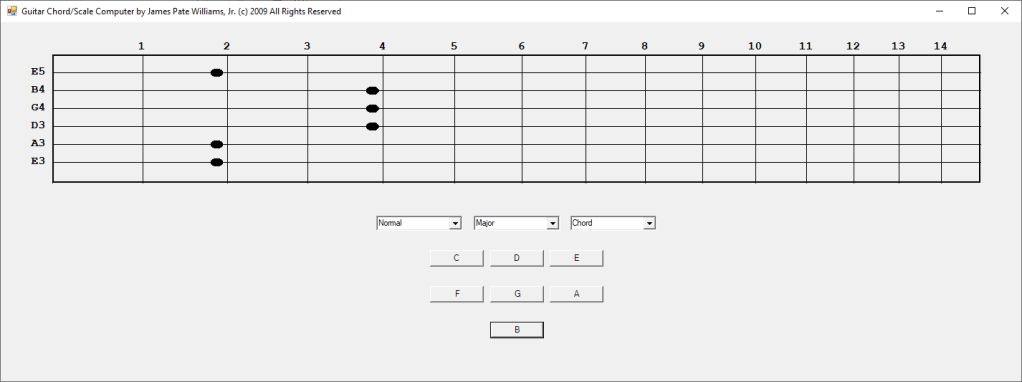
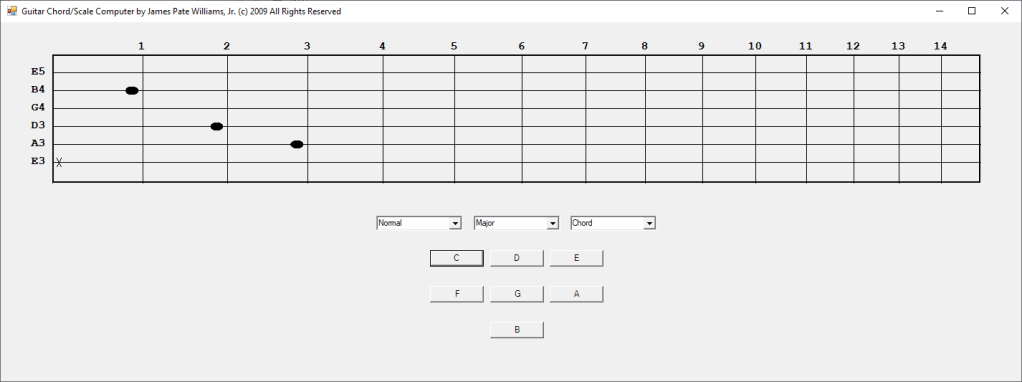
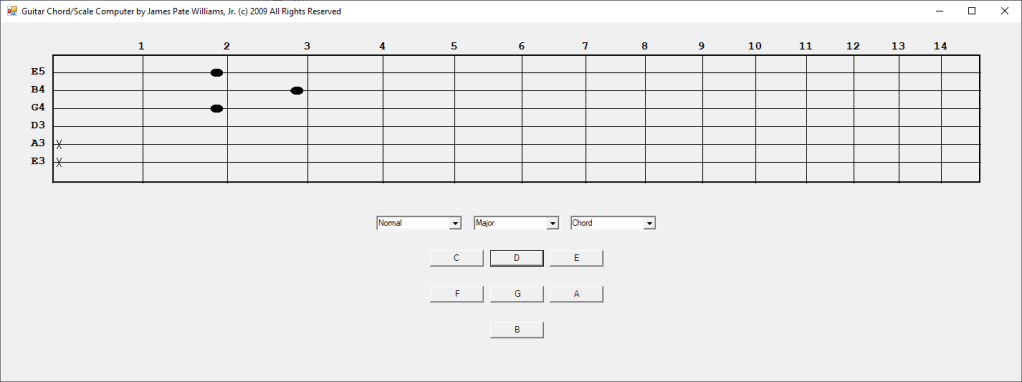
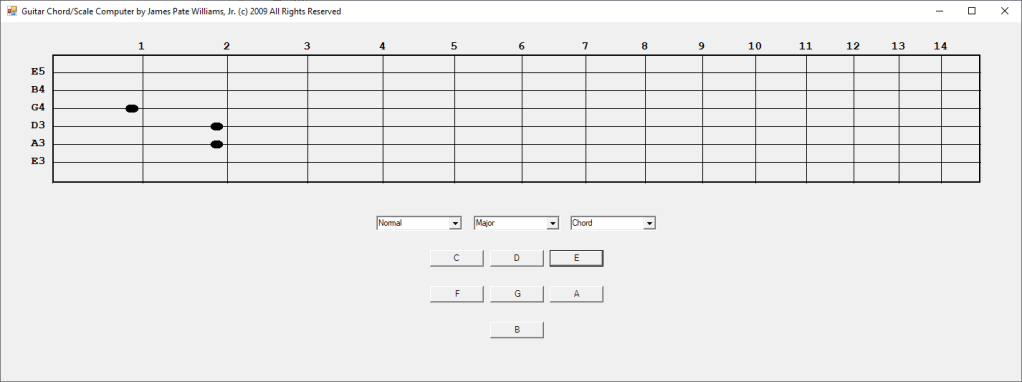
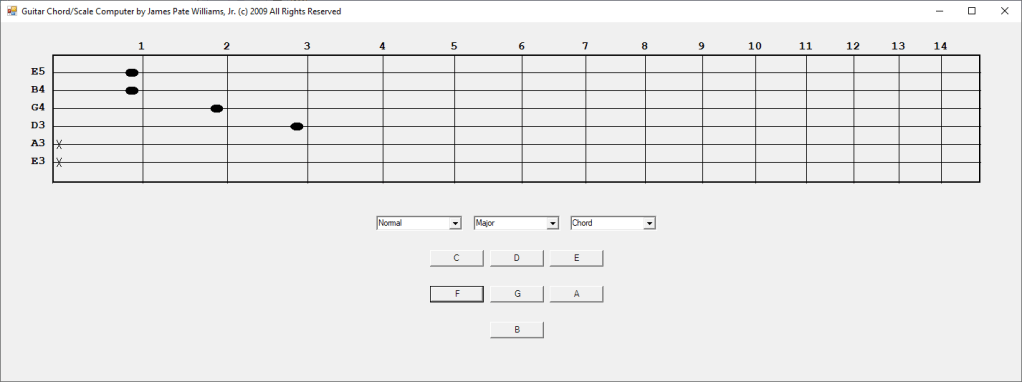
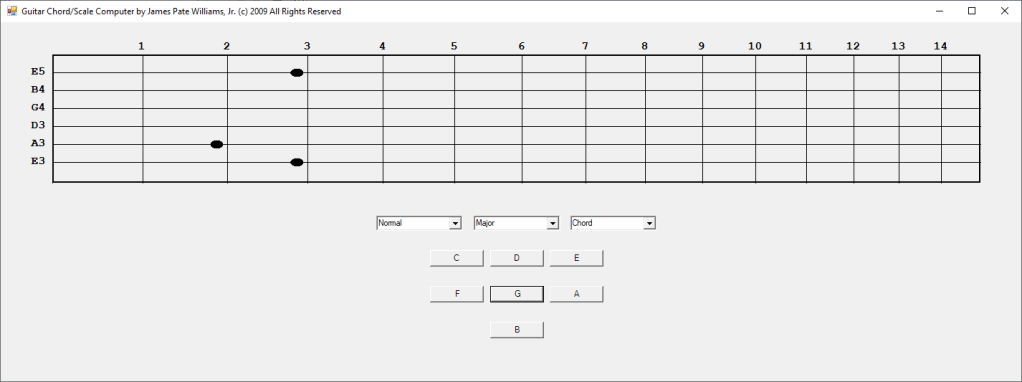
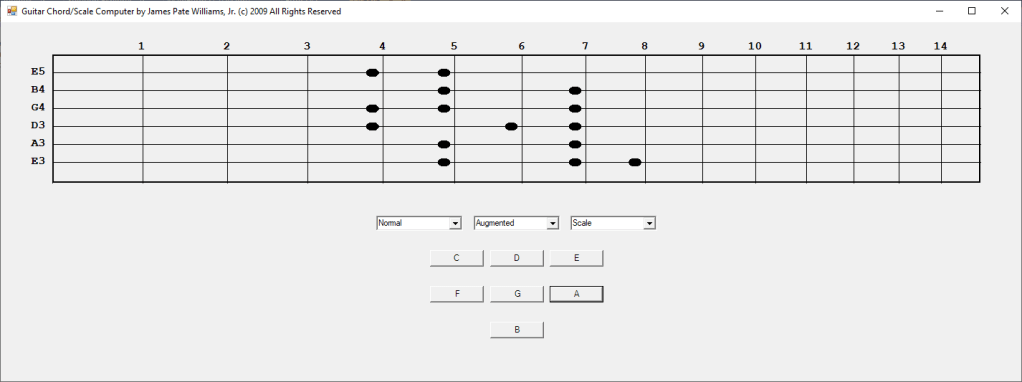
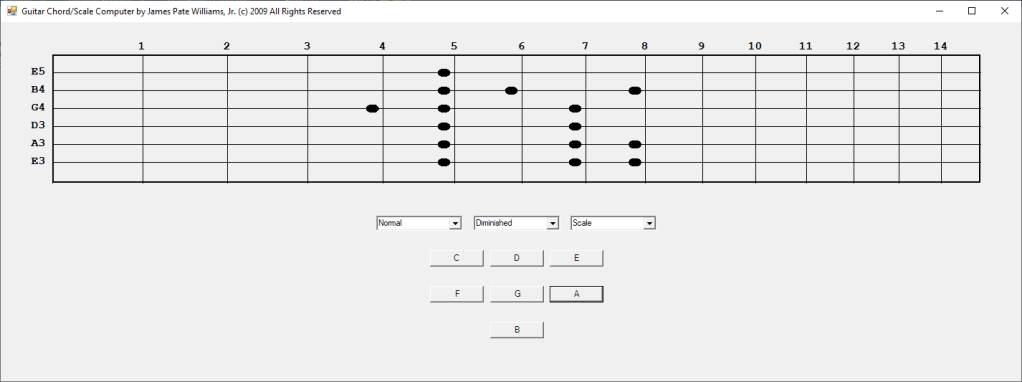
In the early 2000s I bought a hardware SNARLING DOGS GUITAR CHORD Computer. In 2003 I decided to emulate the hardware device in Java and later in 2009 C#. I have more work to do such as adding minor, augmented, diminished, sixth, seventh, and ninth chords. I require more scales such as the seventh and ninth scales.
A few years ago, I implemented the LLL lattice reduction algorithm found in two references: “Handbook of Applied Cryptography” Edited by Alfred J. Menezes et al and “A Course in Computational Algebraic Number Theory” by Henri Cohen. My new implementation in C# uses 64-bit integers and BigIntegers. Here are some results.
// Algorithms from "A Course in Computational
// Algebraic Number Theory" by Henri Cohen
// Implemented by James Pate Williams, Jr.
// Copyright (c) 2023 All Rights Reserved

using System.Collections.Generic;
using System.Numerics;

namespace PoweringAlgorithms
{
    public interface IAlgorithms
    {
        // Extended Euclidean Algorithm
        BigInteger Algorithm_1_2_1(
            BigInteger g, BigInteger n);
        BigInteger Algorithm_1_2_2(
            int e, BigInteger g, BigInteger n);
        public BigInteger Algorithm_1_2_3(
            int e, BigInteger g, BigInteger n);
        void Algorithm_1_3_6(
            BigInteger a, BigInteger b,
            out BigInteger u, out BigInteger v,
            out BigInteger d);
        List<int> GetBits(BigInteger N);
        BigInteger Inverse(
            BigInteger a, BigInteger n);
    }
}
using System.Collections.Generic;
using System.Numerics;

namespace PoweringAlgorithms
{
    public class Algorithms : IAlgorithms
    {
        public BigInteger Algorithm_1_2_1(
            BigInteger g, BigInteger n)
        {
            BigInteger y = 1;

            if (n == 0)
                return y;

            BigInteger N, z;

            if (n < 0)
            {
                N = -n;
                z = Inverse(g, n);
            }

            else
            {
                N = n;
                z = g;
            }

            while (N > 0)
            {
                if (N % 2 == 1)
                    y *= z;

                N /= 2;
                z *= z;
            }

            return y;
        }

        public BigInteger Algorithm_1_2_2(
            int e, BigInteger g, BigInteger n)
        {
            BigInteger E, N, y, z;

            if (n == 0)
                return BigInteger.One;

            if (n < 0)
            {
                N = -n;
                z = Inverse(g, n);
            }

            else
            {
                N = n;
                z = g;
            }

            y = z;
            E = BigInteger.Pow(2, e);
            N -= E;

            while (E > 1)
            {
                E /= 2;
                y *= y;

                if (N >= E)
                {
                    N -= E;
                    y *= z;
                }
            }

            return y;
        }

        public BigInteger Algorithm_1_2_3(
            int e, BigInteger g, BigInteger n)
        {
            BigInteger y = 1;

            if (n == 0)
                return y;

            BigInteger N, z;

            if (n < 0)
            {
                N = -n;
                z = Inverse(g, n);
            }

            else
            {
                N = n;
                z = g;
            }

            y = z;

            int f = e;
            List<int> bits = GetBits(N);

            while (f > 0)
            {
                f--;
                y *= y;
                if (bits[f] == 1)
                    y *= z;
            }

            return y;
        }

        public void Algorithm_1_3_6(
                    BigInteger a, BigInteger b,
                    out BigInteger u, out BigInteger v,
                    out BigInteger d)
        {
            u = 1;
            d = a;

            if (b == 0)
            {
                v = 0;
                return;
            }

            BigInteger q, t1, t3, v1 = 0, v3 = b;

            while (v3 > 0)
            {
                q = d / v3;
                t3 = d % v3;
                t1 = u - q * v1;
                u = v1;
                d = v3;
                v1 = t1;
                v3 = t3;
            }

            v = (d - a * u) / b;
        }

        public List<int> GetBits(BigInteger N)
        {
            int b;
            List<int> temp = new();

            while (N > 0)
            {
                b = (int)(N % 2);
                N /= 2;
                temp.Add(b);
            }

            List<int> bits = new();

            for (int i = temp.Count; i >= 0; i--)
                bits.Add(temp[i]);

            return bits;
        }

        public BigInteger Inverse(BigInteger a, BigInteger n)
        {
            BigInteger d, u, v;

            Algorithm_1_3_6(
                a, n, out u, out v, out d);

            return u;
        }
    }
}
using System;
using System.Numerics;
using System.Windows.Forms;

namespace PoweringAlgorithms
{
    public partial class TestForm : Form
    {
        public TestForm()
        {
            InitializeComponent();
        }

        private static BigInteger Horner(string text)
        {
            BigInteger a = text[0] - '0';

            for (int i = 1; i < text.Length; i++)
                a = 10 * a + text[i] - '0';

            return a;
        }

        private void button1_Click(object sender, EventArgs e)
        {
            int expon = 0;
            Algorithms algos = new Algorithms();
            BigInteger g = Horner(textBox1.Text);
            BigInteger n = Horner(textBox2.Text);
            BigInteger a = algos.Algorithm_1_2_1(g, n);
            BigInteger m = BigInteger.Abs(n);

            while (m > 0)
            {
                expon++;
                m /= 2;
            }

            BigInteger b = algos.Algorithm_1_2_2(expon - 1, g, n);
            BigInteger c = algos.Algorithm_1_2_2(expon - 1, g, n);

            textBox3.Text = a.ToString();
            textBox4.Text = b.ToString();
            textBox5.Text = c.ToString();
        }

        private void button2_Click(object sender, EventArgs e)
        {
            Close();
        }
    }
}
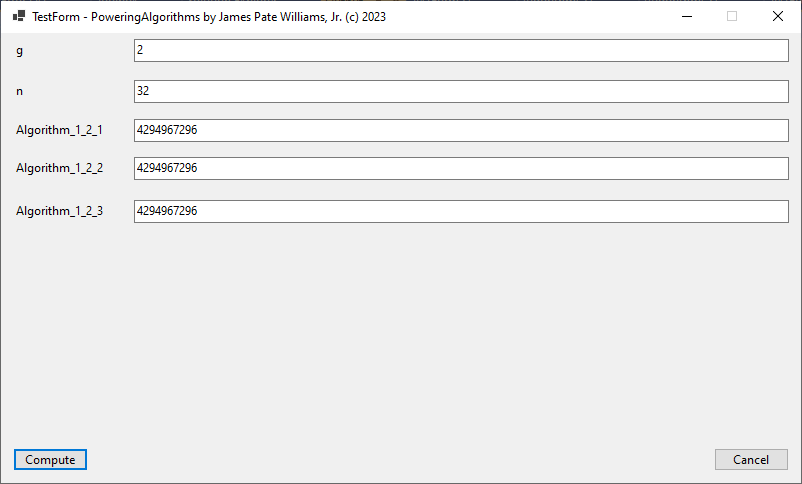
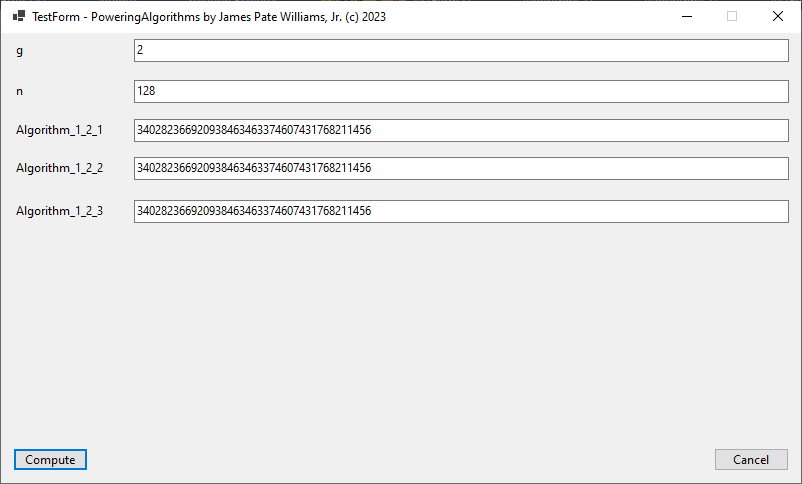
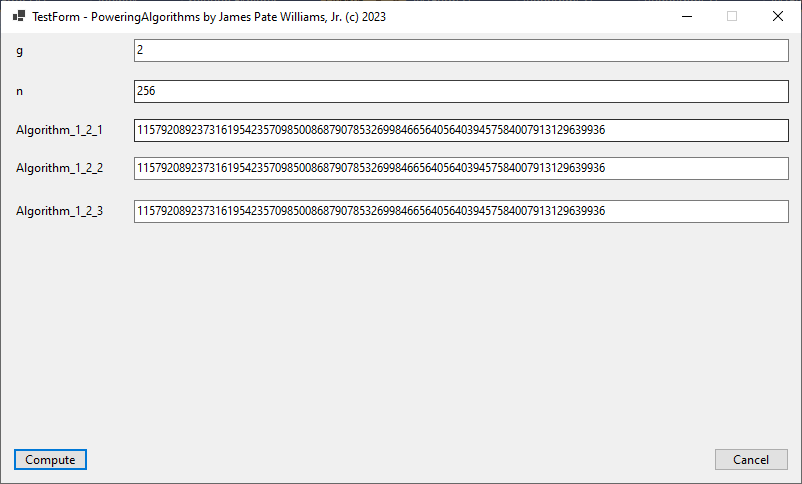
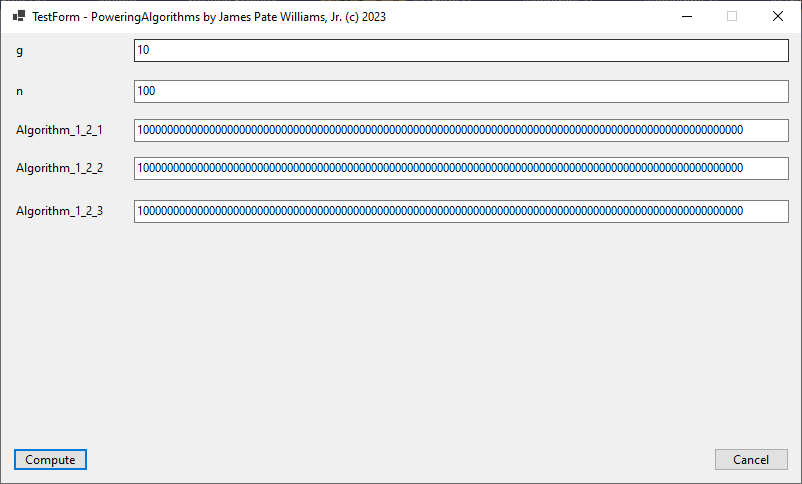
Algorithms are found in the textbook “Introduction to Algorithms” by Thomas H. Cormen, Charles E. Leiserson, Ronald L. Rivest p. 340.
using System;
using System.Collections.Generic;
using System.Windows.Forms;

namespace Huffman
{
    public partial class MainForm : Form
    {
        private int leafNodes;

        public MainForm()
        {
            InitializeComponent();
        }

        private void InorderTraversal(BinaryTreeNode<CharFreq> node)
        {
            if (node != null)
            {
                InorderTraversal(node.Left);

                CharFreq cf = node.Value;
                int ord = (int)cf.ch;

                if (node.Left == null && node.Right == null)
                {
                    textBox2.Text += leafNodes.ToString("F0").PadLeft(3) + '\t';
                    textBox2.Text += "'" + new string(cf.ch, 1) + "' " + '\t';
                    textBox2.Text += node.Value.freq.ToString() + "\r\n";
                    leafNodes++;
                }

                InorderTraversal(node.Right);
            }
        }

        private void button1_Click(object sender, EventArgs e)
        {
            string s = textBox1.Text;
            int n = s.Length;
            List<CharFreq> list = new List<CharFreq>();

            textBox2.Text = string.Empty;

            for (int i = 0; i < n; i++)
            {
                bool found = false;
                char c = s[i];
                CharFreq cf = new CharFreq();

                for (int j = 0; !found && j < list.Count; j++)
                {
                    if (c == list[j].ch)
                    {
                        found = true;
                        cf.ch = c;
                        cf.freq = 1 + list[j].freq;
                        list.RemoveAt(j);
                        list.Add(cf);
                    }
                }

                if (!found)
                {
                    cf.ch = c;
                    cf.freq = 1;
                    list.Add(cf);
                }
            }

            HuffmanTree ht = new HuffmanTree();
            BinaryTreeNode<CharFreq> root = ht.Build(list, list.Count);

            InorderTraversal(root);
            textBox2.Text += "\r\n# characters = " + n.ToString() + "\r\n";
            textBox2.Text += "# leaf nodes = " + leafNodes.ToString() + "\r\n";
            textBox2.Text += "% compressed = " +
                (100.0 - 100.0 * ((double)leafNodes) / n).ToString("F2") + "\r\n";
        }
    }
}
namespace Huffman
{
    public class BinaryTreeNode<T> : Node<T>
    {
        public BinaryTreeNode() : base() { }
        public BinaryTreeNode(T data) : base(data, null) { }
        public BinaryTreeNode(T data, BinaryTreeNode<T> left, BinaryTreeNode<T> right)
        {
            base.Value = data;
            NodeList<T> children = new NodeList<T>(2)
            {
                [0] = left,
                [1] = right
            };

            base.Neighbors = children;
        }

        public BinaryTreeNode<T> Left
        {
            get
            {
                if (base.Neighbors == null)
                    return null;
                else
                    return (BinaryTreeNode<T>)base.Neighbors[0];
            }
            set
            {
                if (base.Neighbors == null)
                    base.Neighbors = new NodeList<T>(2);

                base.Neighbors[0] = value;
            }
        }

        public BinaryTreeNode<T> Right
        {
            get
            {
                if (base.Neighbors == null)
                    return null;
                else
                    return (BinaryTreeNode<T>)base.Neighbors[1];
            }
            set
            {
                if (base.Neighbors == null)
                    base.Neighbors = new NodeList<T>(2);

                base.Neighbors[1] = value;
            }
        }
    }
}
using System.Collections.Generic;

namespace Huffman
{
    public class HuffmanTree
    {
        public BinaryTreeNode<CharFreq> Build(List<CharFreq> charFreq, int n)
        {
            PriorityQueue Q = new PriorityQueue();

            for (int i = 0; i < n; i++)
            {
                BinaryTreeNode<CharFreq> z = new BinaryTreeNode<CharFreq>(charFreq[i]);

                Q.insert(z);
            }

            Q.buildHeap();

            for (int i = 0; i < n - 1; i++)
            {
                BinaryTreeNode<CharFreq> x = Q.extractMin();
                BinaryTreeNode<CharFreq> y = Q.extractMin();
                CharFreq chFreq = new CharFreq();

                chFreq.ch = (char)((int)x.Value.ch + (int)y.Value.ch);
                chFreq.freq = x.Value.freq + y.Value.freq;

                BinaryTreeNode<CharFreq> z = new BinaryTreeNode<CharFreq>(chFreq);

                z.Left = x;
                z.Right = y;
                Q.insert(z);
            }

            return Q.extractMin();
        }
    }
}
namespace Huffman
{
    public class Node<T>
    {
        // Private member-variables
        private T data;
        private NodeList<T> neighbors = null;

        public Node() { }
        public Node(T data) : this(data, null) { }
        public Node(T data, NodeList<T> neighbors)
        {
            this.data = data;
            this.neighbors = neighbors;
        }

        public T Value
        {
            get
            {
                return data;
            }
            set
            {
                data = value;
            }
        }

        protected NodeList<T> Neighbors
        {
            get
            {
                return neighbors;
            }
            set
            {
                neighbors = value;
            }
        }
    }
}
using System.Collections.ObjectModel;

namespace Huffman
{
    public class NodeList<T> : Collection<Node<T>>
    {
        public NodeList() : base() { }

        public NodeList(int initialSize)
        {
            // Add the specified number of items
            for (int i = 0; i < initialSize; i++)
                base.Items.Add(default(Node<T>));
        }

        public Node<T> FindByValue(T value)
        {
            // search the list for the value
            foreach (Node<T> node in Items)
                if (node.Value.Equals(value))
                    return node;

            // if we reached here, we didn't find a matching node
            return null;
        }
    }
}
using System.Collections.Generic;

namespace Huffman
{
    public struct CharFreq
    {
        public char ch;
        public int freq;
    }

    public class PriorityQueue
    {
        int heapSize;
        List<BinaryTreeNode<CharFreq>> nodeList;

        public List<BinaryTreeNode<CharFreq>> NodeList
        {
            get
            {
                return nodeList;
            }
        }

        public PriorityQueue()
        {
            nodeList = new List<BinaryTreeNode<CharFreq>>();
        }

        public PriorityQueue(List<BinaryTreeNode<CharFreq>> nl)
        {
            heapSize = nl.Count;
            nodeList = new List<BinaryTreeNode<CharFreq>>();

            for (int i = 0; i < nl.Count; i++)
                nodeList.Add(nl[i]);
        }

        public void exchange(int i, int j)
        {
            BinaryTreeNode<CharFreq> temp = nodeList[i];

            nodeList[i] = nodeList[j];
            nodeList[j] = temp;
        }

        public void heapify(int i)
        {
            int l = 2 * i + 1;
            int r = 2 * i + 2;
            int largest = -1;

            if (l < heapSize && nodeList[l].Value.ch > nodeList[i].Value.ch)
                largest = l;
            else
                largest = i;
            if (r < heapSize && nodeList[r].Value.ch > nodeList[largest].Value.ch)
                largest = r;
            if (largest != i)
            {
                exchange(i, largest);
                heapify(largest);
            }
        }

        public void buildHeap()
        {
            for (int i = heapSize / 2; i >= 0; i--)
                heapify(i);
        }

        public int size()
        {
            return heapSize;
        }

        public BinaryTreeNode<CharFreq> elementAt(int i)
        {
            return nodeList[i];
        }

        public void heapSort()
        {
            int temp = heapSize;

            buildHeap();

            for (int i = heapSize - 1; i >= 1; i--)
            {
                exchange(0, i);
                heapSize--;
                heapify(0);
            }

            heapSize = temp;
        }

        public BinaryTreeNode<CharFreq> extractMin()
        {
            if (heapSize < 1)
                return null;

            heapSort();

            exchange(0, heapSize - 1);
            heapSize--;

            BinaryTreeNode<CharFreq> node = nodeList[heapSize];

            nodeList.RemoveAt(heapSize);
            heapSize = nodeList.Count;
            return node;
        }

        public void insert(BinaryTreeNode<CharFreq> node)
        {
            nodeList.Add(node);
            heapSize = nodeList.Count;
            buildHeap();
        }
    }
}
We calculate the ground state energies for Helium (Z = 2), Lithium (Z = 3), Beryllium (Z = 4), Boron (Z = 5), and Carbon (Z = 6). Currently, only three of the five atoms are implemented.
















 Numerical Explorations